
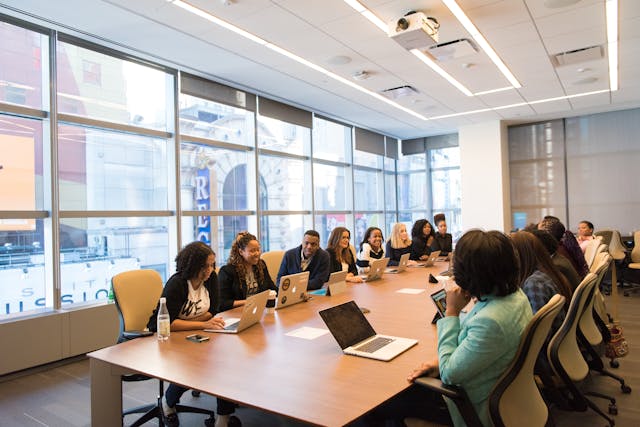

It’s 4:00 PM on a Wednesday. You just clicked “Leave Meeting” for the fifth time today. You haven’t run a marathon. You haven’t built a house. You haven’t even left your chair. Yet, you feel a bone-deep exhaustion that rivals physical labor. Your eyes are dry, your temper is short, and your brain feels like it’s packed with cotton wool.
Welcome to the phenomenon of “Zoom Fatigue.” It isn’t just you, and you aren’t just being lazy. The shift to remote work was supposed to give us more freedom. Instead, for many, it has created a new kind of prison—a digital panopticon where we are constantly performing for a grid of pixelated faces.
We have tried everything to mitigate the drain. We bought the ring lights. We bought the blue-light blocking glasses. We upgraded our ergonomic chairs. But the exhaustion persists. This has led a wave of burnt-out professionals to look for internal solutions rather than external ones. They are swapping their afternoon espresso for CBD gummies, looking for a way to quiet the digital noise without losing their professional edge.
If you feel like your battery is draining twice as fast as it used to, here is the science behind why video calls are wrecking your energy, and how a natural approach might help you survive the marathon.
The Science of the Digital Stare
Why is a video meeting more tiring than a real one? Stanford researchers actually broke this down, and it comes down to non-verbal overload.
In a physical conference room, you don’t stare into your colleagues’ eyes for an hour straight. You look at your notebook, you look at the whiteboard, you look out the window. On a video call, however, everyone is looking at everyone, all the time. To your primal brain, that amount of direct eye contact feels like a threat. It triggers a low-level “fight or flight” response. You are hyper-aroused, constantly scanning for social cues that are harder to read through a screen.
Then there is the mirror effect. Most platforms show you your own face by default. Imagine having a conversation in real life while someone holds a mirror six inches from your nose. It forces you to constantly self-evaluate. Is my hair weird? Do I look bored? Is that a double chin? This constant self-monitoring burns a tremendous amount of cognitive glucose. No wonder you are shattered by lunchtime.
The Cortisol Spike
This state of hyper-arousal leads to a spike in cortisol—the stress hormone. When you are on back-to-back calls, your body stays in a state of heightened alert. You never get the reset, which usually happens when walking from one meeting room to another.
By the afternoon, your nervous system is fried. You might feel “wired but tired”—exhausted, but too anxious to actually relax. This is where the coffee habit backfires. Caffeine mimics the stress response; it pumps you up. But if you are already over-stimulated by the screen, adding caffeine is like throwing gasoline on a fire. You don’t need energy; you need balance.
Enter the Green Reset
This is where the conversation shifts to CBD (Cannabidiol). Unlike THC, the compound in cannabis that gets you high, CBD is non-psychoactive. It doesn’t impair your judgment or make you giggle at spreadsheets. Instead, it interacts with the body’s endocannabinoid system (ECS).
Think of the ECS as the body’s master regulator. Its main job is homeostasis—keeping your internal environment stable despite external chaos. When you are bombarded with stress (like six hours of video calls), your ECS gets overwhelmed.
Supplementing with CBD is like giving that system a backup generator.
- The Edge Removal: Many users report that CBD helps smooth out the jagged edges of anxiety. It doesn’t make you sleepy; it just turns the volume down on the stress response.
- Focus without the Jitters: Unlike coffee, which can make your mind race, CBD is often associated with a calm focus. It allows you to stay present in the meeting without the background hum of panic.
Implementing the Protocol
If you are ready to reclaim your brain from the video chat overlords, you need a strategy. You can’t just hope for a better schedule. You have to engineer your physiology to handle the load.
1. The Pre-Game Ritual: Consider timing your intake. Edibles, like gummies, take time to digest—usually 30 to 60 minutes. If you know you have a meeting marathon, starting at 1:00 PM, popping a gummy at noon acts as a preventative strike. You are priming your Endocannabinoid System before the stress hits, rather than trying to put out the fire after you are already overwhelmed.
2. Hide Your Self-View: This is a tech hack, not a supplement, but it is crucial. Right-click your own video and select “Hide Self View.” The other participants can still see you, but you can’t see yourself. This instantly removes the mirror effect. You will be shocked at how much lighter the mental load feels when you aren’t critiquing your own appearance every thirty seconds.
3. The Audio-Only Walk: Normalize the concept of walking meetings. If a meeting doesn’t require screen sharing, ask if you can take it audio-only. Put in your earbuds, put your phone in your pocket, and walk outside. The combination of physical movement, fresh air, and the absence of a screen is the ultimate antidote to Zoom fatigue. If you pair this with the calming effects of your wellness routine, you turn a drain into a recharge.
4. The 20-20-20 Rule: Biology demands that you look away. For every 20 minutes of screen time, look at something 20 feet away for 20 seconds. This relaxes the ciliary muscles in your eyes. It breaks the hypnotic stare that causes headaches. Use these 20 seconds to take a deep breath. Check in with your body. Are your shoulders up by your ears? Drop them. Unclench your jaw.
The Modern Employee
Remote work isn’t going anywhere. The video calls are here to stay. But we cannot sustain the pace of 2020 forever. We have to adapt. We have to treat our energy like a finite resource.
Surviving the modern workday requires a toolkit. It requires better boundaries, better tech habits, and better fuel for our nervous systems. Whether that means turning off the camera, taking a walk, or using natural support to keep your cortisol in check, the goal is the same: to end the day feeling like a person, not a pixel.
You don’t have to just power through the fatigue. You can hack it. Take a deep breath, grab a gummy, and hide your self-view. You’ve got this.